

Should our congregation resist public injustice? Or forgo divisive political action?
Using the Braver Angels Debate Method to strengthen congregational discourse

Thank you for your interest in our Substack Together Across Differences which flows from our book Beyond the Politics of Contempt: Practical Steps to Build Positive Relationships in Divided Times. All of our Substack posts are free, and we appreciate all of our free and paid subscribers.
—
This week’s post is by a guest, Jeannie Sperry. Jeannie is a member of St. Andrew’s Episcopal Church in New London, New Hampshire. St. Andrew’s has a Braver Angels Alliance (similar to a chapter). Doug and Beth have enjoyed working with this congregation on different Braver Angels initiatives, including community debates and workshops with New Hampshire state legislators. Today, we hear from Jeannie about her experience chairing a debate that used the Braver Angels method, which other churches and religious organizations could adapt. It was on a contentious current political topic— immigration. Here’s what her congregation learned.
But first—The Braver Angels Debate Format is unique— it’s not two debaters attacking each other trying to score points— instead it’s a marketplace of ideas where multiple people attending participate by speaking on one of two viewpoints, or asking questions of the speakers. Because of the alternating of the two viewpoints, these debates are inherently balanced. In addition, each debate has ground rules that promote an environment of respect.
Together Across Differences: Jeannie, tell us what the goal of your debate was.
The goal of the forum was to provide an opportunity for the parish members to openly voice their opinions and concerns about taking public action versus staying politically neutral on a contentious issue, immigration.
Together Across Differences: What was the specific resolution debated?
Jeannie: Our resolution was: Should St. Andrew’s resist public injustice or forgo divisive political action? We had “resist” and “forgo/stay neutral” speakers lined up, despite a majority favoring the “resist” side.
Together Across Differences: How many attended? Did everyone who wished to voice an opinion speak?
Jeannie: We limited the debate to congregants. Approximately 70 people attended the forum, representing a significant proportion of our parish. Attendees who were uncomfortable speaking were offered note cards to express their view— these note cards were read aloud by a Braver Angels leader. Only two attendee congregants took advantage of the note cards, indicated to us that the vast majority of our congregation was comfortable speaking on this topic.
Together Across Differences: Tell us more about what the “resist” and “forgo/stay neutral” speakers argued for.
Jeannie: Resist speakers generally said it was a moral imperative for St. Andrew’s to take a public stand against actions such as dehumanizing treatment of immigrants, federal government use of force, and terrorization of communities. There was a sense that group as well as individual actions should be sponsored by our congregation, with specifics to be worked out.
Forego/Stay Neutral speakers emphasized the importance of acting on individual conscience, for example, to do the hard work of helping legal immigrants through the complex process of naturalization – as well as the many other one-to-one acts of compassion that members of the parish participate in. There was a sense from the forgo group of not wanting St. Andrew’s to be a policymaking and implementation agent.
Together Across Differences: What else did you notice?
Jeannie: While there was considerable emotion, the communications were respectfully received. Using the Braver Angels debate format provided the framework for setting expectations for behavior and encouraging participation from all. Attendees respected time limits and avoided cross-talk.
Together Across Differences: Will there by any action steps by your congregation as a result of the debate?
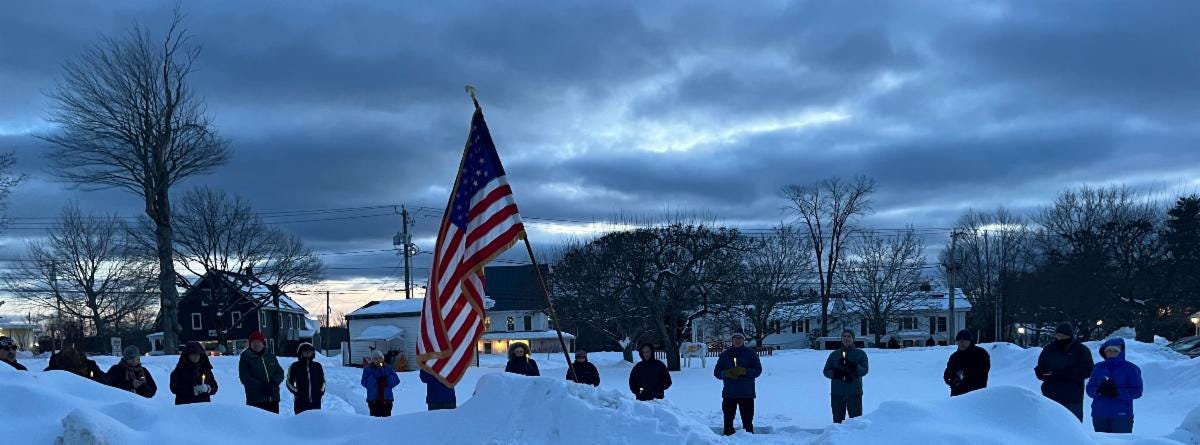
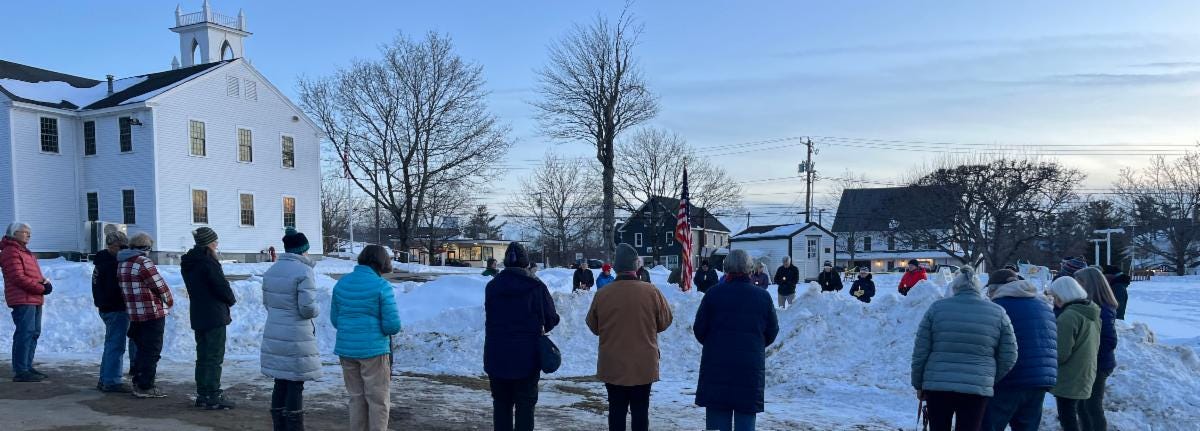
Jeannie: Yes! We will be holding weekly silent prayer vigils, standing outside in a circle surrounding the American flag, as a symbol of our shared concern for our country. Additionally, meetings are being held to organize activities and a listserv was developed to share resources about upcoming protests and means of participating in local and regional events. Thus we have a weekly nonpartisan shared event as well as an organized means of sharing resources and events related to activism, for those individual congregants who wish to participate. And lastly, our Vestry, our church governing body, decided to form a committee to brainstorm group norms to enhance trust and comfort in the Vestry.
Together Across Differences: Jeannie, it sounds like your congregation did a wonderful job of coming up with actions to meet the needs of all of your congregants. It’s a great example of the intersection of bridge-building and activism. Congratulations on your leadership as debate chair.
If you enjoyed this post, check out our archives at https://togethernow.substack.com/archive
So wise, loving, caring, brave, respectful. Amazing!
Very impressive local work.