


Our posts are completely free to read. If you enjoy our work and wish to support our book, there’s an option to upgrade to paid, but only if you want to. We are grateful to all subscribers!
___
A 2024 Wall Street Journal story was headlined “We Are Starting to Enjoy Hatred -- The country has long been divided, but estrangement has become alluring in the age of Biden and Trump.” Have we really sunk that far?
And a more personal question – are you enjoying hating Democratic or Republican politicians and the people who support them? Do you find yourself speaking with disdain about “those people” on the other side? Are you contributing to the politics of humiliation and contempt?
If so, is this really where you want to be? Are you becoming like Dr. Seuss’s memorable character The Grinch whose “heart was two sizes too small?” Step back and consider how this is impacting your personal health and relationships. As author Kurt Vonnegut observes, “Hate, in the long run, is about as nourishing as cyanide.”
The problem clearly runs deeper than politics. In an article in The Atlantic titled “How America Got Mean,” author David Brooks writes that our culture has shifted from an emphasis on character and reputation to self-centeredness and narcissism. Fewer Americans are giving to charity and social trust is dropping.
I don’t want to exaggerate – there is still a lot of kindness among family, friends, and even strangers. I love the podcast series “My Unsung Hero,” short segments produced by Hidden Brain that often appear on NPR. In these powerful stories, people recall ways that others – most often strangers -- did something that touched them profoundly and positively impacted their lives.
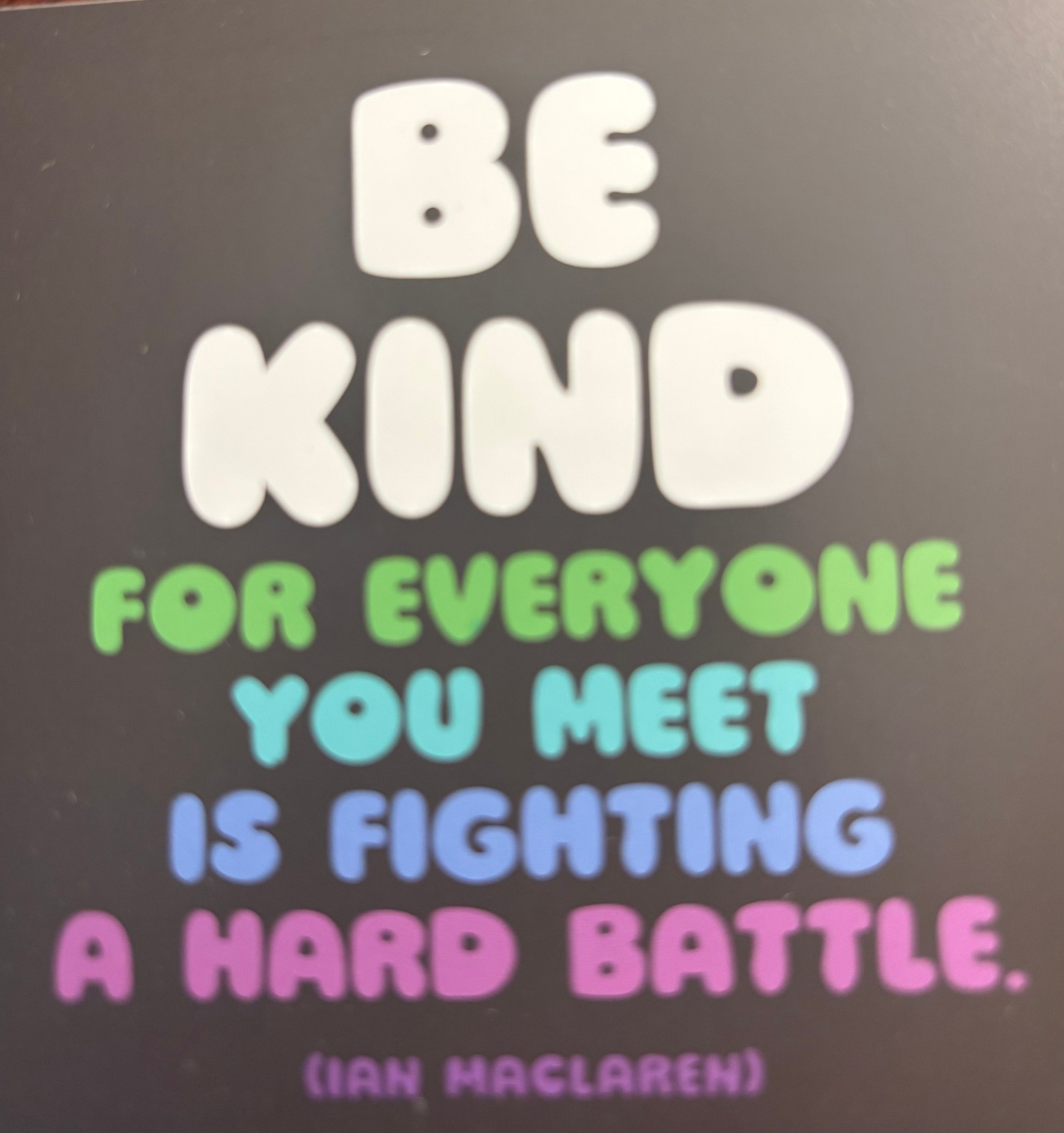
For example, Mary Fran Lyons describes being stressed in a mall, wearing a baseball hat after losing her hair to chemotherapy. A passing stranger, who clearly observed her distress, said “You’re going to be OK.” More than 20 years later, Lyons recalls that moment: “If that woman were standing in front of me right now, I would say to her, ‘You gave me hope at a time when I really needed to hear it.’ And I still think of that to this day.”
Another example: Samantha Hodge-Williams was 20 and terrified as she lay on an operating table worrying that a large ovarian mass might be cancerous. A kind anesthesiologist sensed her unease and engaged in a gentle conversation that led to singing. Hodge-Williams remembers, “her reassuring voice, how much it meant to me. . . not just the science of medicine, but the compassion and care to take a few moments to care for me.”
Little acts of kindness can touch people in memorable ways, positively influencing our lives.
While kindness is still around, most people would agree that there is less of it than there used to be. We remember television’s Mr. Fred Rogers telling children to be kind to one another, but many think it is perfectly OK these days to demean – or even threaten – other people. Disrespect and distrust pervade our whole society, including schools, workplaces, and public spaces.
Rudeness on our highways is one example. A few years ago, I was riding with my wife on an interstate entry ramp when the driver behind came close to our bumper, clearly suggesting that she speed up. As we merged onto the highway, the angry driver quickly passed, giving my wife the finger before speeding off. We have all heard stories of these kinds of situations deteriorating into confrontation and even violence, but I was feeling more sad than angry that day. I was wondering about that driver’s personal story. Is he often this angry or was he just having a bad day? Did he regret his behavior later? Does he treat his family and friends differently than strangers? Sadly, I’ve seen behavior like this repeated multiple times since.
We need to do better in the spirit of these words from Tenzin Gyatso, 14th Dalai Lama: “Be kind whenever possible. It is always possible.”
The Golden Rule continues to offer guidance, wisdom, protection, and hope.
May we find ways to speak the truth in love.
Absolutely excellent! Our world will be better for everyone if we lay down our rhetorical weapons of war, soften our hearts, and learn to listen with our mouths closed.